My First Memory at a Korean Bathhouse
One of my earliest memories is going to a public bathhouse with my mom.
Back then, most homes in Korea didn’t have proper shower or hot water systems.
In my own house, we had a coal briquette boiler, and we had to boil water manually to bathe.
So it was completely normal for families to visit the local bathhouse (mokyoktang) — neighborhood bathhouses — once a week.
Every town had at least one. It wasn’t a luxury; it was part of life.
Even now, decades later, I still cherish those quiet hours spent soaking in warm water. But sadly, this tradition is slowly fading, especially among the younger generation.
Modern homes now have perfect hot showers and bathtubs, so public baths are no longer as essential — but to me, they are still magical healing spaces.
What to Expect Inside a Korean Bathhouse
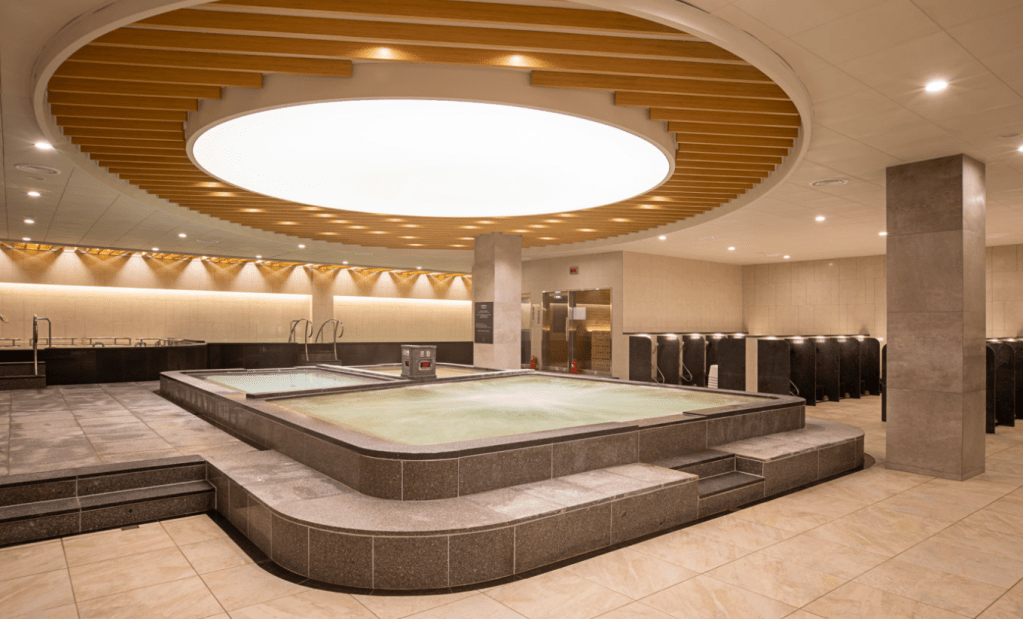
If you ever visit a mokyoktang, here’s what you’ll typically find:
- Hot bath (39°C / 102°F)
- Super hot bath (42°C/108°F)
- Cold plunge (16–19°C/61–66°F)
- Dry sauna & Steam sauna
- Wall-mounted showers and small plastic stools for seated washing
- Buckets to scoop and rinse
- Scrubbing bed where professional exfoliation (called sesin) is offered
You’ll often see people scrubbing themselves with colorful scrub towels, or getting a deep scrub from a professional. It might look intense at first — but it’s deeply satisfying!
My Thoughts on Sesin(Korean scrub)
Some dermatologists say over-scrubbing can damage your skin.
But personally, I believe a light scrub once a week, or exfoliation once a month, helps keep my skin smooth and renewal — especially considering that our skin naturally sheds about once every 28 to 30 days.
It helps to remove dead skin, improves blood circulation, and just makes me feel… reborn.
Plus, alternating between hot and cold baths is great for relieving pain and relaxing muscles.
And in that peaceful time, I can focus on myself — do a face massage, apply a hair mask, or even use my gua sha tools. It’s a ritual of care, not just cleansing.
Why I Still Go to the Bathhouse Every Week
For me, visiting the bathhouse is a healing ritual.
I go at least once a week to soak, breathe, scrub, and reconnect with myself.
The entrance fee to most Korean bathhouses is around 10,000 KRW (about $7) with no time limit — and honestly, it’s one of the simplest yet most guaranteed pleasures in everyday life.
It’s more than just getting clean — it’s a moment of Korean-style self-love. If you ever visit Korea, I truly recommend spending a few hours in a traditional bathhouse. Small money, deep healing. That’s Korean bathhouse magic.

 The Healing Korean