What Meditation Finally Felt Like

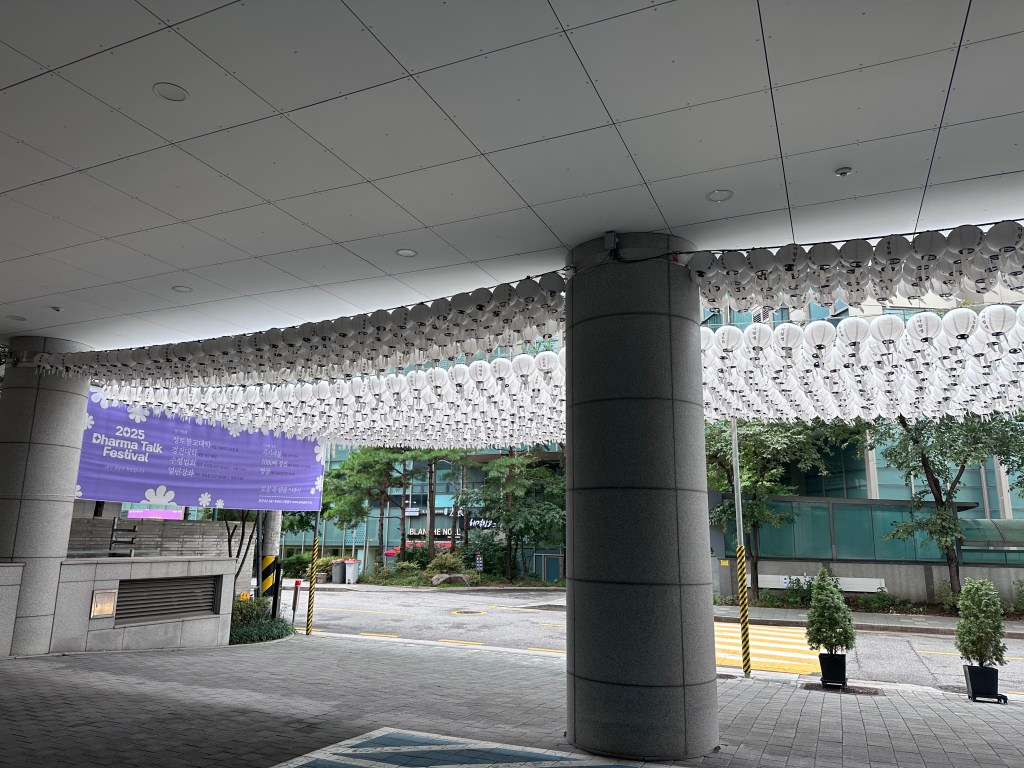
Yesterday, I visited a Buddhist center in Seocho-dong, Gangnam—part of the Jungto Society in Seoul, Korea.
They offer a free four-hour program called “Jeol-cation (절캉스)”, a kind of urban templestay for people looking to take a breath in the middle of city life.

I wasn’t sure what to expect, but the moment I arrived, I was surprised.
Unlike the traditional temples hidden deep in the mountains, this one was modern, sleek, and immaculately clean.
The volunteers welcomed me with warm smiles and quiet kindness, which instantly softened something inside me.

The highlight of the visit was the guided meditation session.
I’ve always struggled with meditation.
Whenever I closed my eyes, I’d wonder, “Am I doing this right? What should I be feeling? How do I know if I’m meditating correctly?”

But something the monk said finally made things click.

He explained that true meditation lies somewhere between two extremes:
① a state of total relaxation — and ② a state of intense, alert focus, like a soldier keeping watch.
He said if you’re too relaxed, you’ll get sleepy or lost in thought.
But if you focus too hard, your body tenses up and your senses become overly sharp.
The sweet spot is somewhere in the middle — relaxed, but alert.

That explanation helped me more than any book or app ever did.

I sat in half-lotus position, eyes closed, and focused on the sensation of breath passing through my nose.
The monk said:

“At this moment, the only thing that truly exists is your breath.”

He called that the core of meditation.

And when thoughts arise — and they will — it doesn’t mean you’re failing.
For example, if your thoughts are about future plans or to-dos, those thoughts often grow from worry.
If the thoughts are about past events, they often come from pain or unresolved emotions.

In my case, I kept thinking about what to cook for dinner, how to help my mom next week…
It was like a noisy traffic jam inside my head.
But the monk gently reminded us:

“That, too, is part of meditation.
Simply recognize the thought, watch it pass,
and gently return to the breath. That’s all.”

We did two sessions:
First, 10 minutes of seated meditation, followed by walking meditation.
Then another 30-minute seated session.

I had never sat still for that long before.
And during those 30 minutes, my legs hurt, I itched, I got distracted.
But somehow, I also got it.
Not perfectly.
But a little more than before. I used to think meditation was about emptying your mind.
Now, I think it’s more about watching your mind without judgment — breath by breath, moment by moment.

Foot Bath at Home – Easy DIY SPA, Korean Self-Care

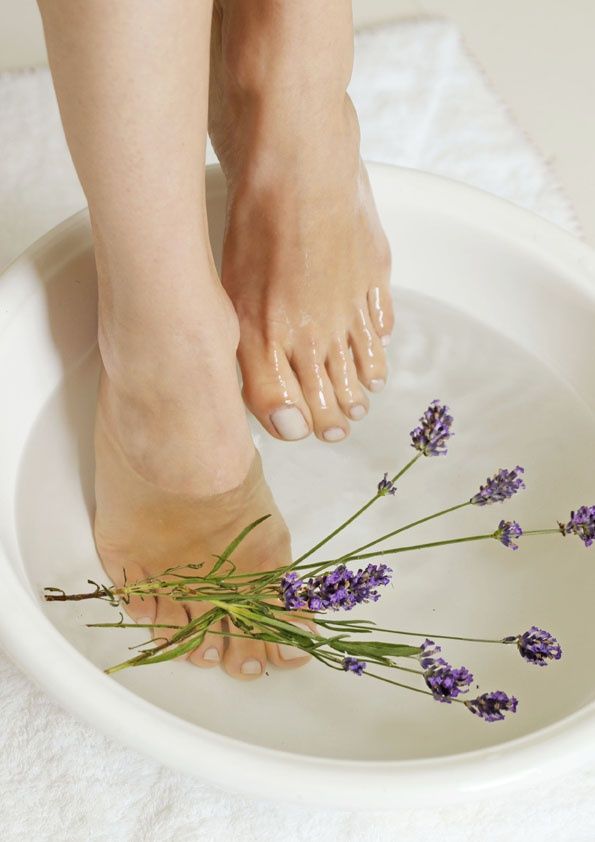
Looking for a simple yet powerful way to relax and recharge? A foot bath — or jok-yok (족욕) as we call it in Korea — is one of the easiest self-care rituals you can do at home. This humble practice has been used for centuries in Korean wellness to soothe the body, calm the mind, and promote circulation. Best of all? You only need a basin, warm water, and a few minutes to feel the difference.

🌿 Benefits of a Foot Bath

  • Boosts circulation Warm water helps open blood vessels in your feet and lower legs, improving overall blood flow and warming the entire body.
  • Reduces stress and anxiety Soaking your feet can activate pressure points and nerve endings, signaling your nervous system to relax.
  • Improves sleep quality A warm foot soak before bed helps your body wind down and fall asleep more easily.
  • Eases fatigue and swelling If you’ve been standing or walking all day, a foot bath relieves heaviness, swelling, and tiredness.
  • Detox and skin health Adding salt, herbs, or essential oils may help draw out impurities and soften dry skin.

🛁 How to Do a Foot Bath at Home (Korean Style)

You’ll need:

  • A large basin or foot spa tub
  • Warm water (around 38–42°C / 100–108°F)
  • Optional: Epsom salt, Korean mugwort (ssuk), lavender oil, or fresh ginger slices
  • A towel and cozy socks

Steps:

  1. Fill your basin with warm water up to ankle or calf level.
  2. Add your preferred ingredients (salt, herbs, oils).
  3. Soak your feet for 15–20 minutes.
  4. Breathe deeply, sip some tea, or listen to calm music.
  5. Dry your feet and wear socks to retain warmth.

Tip: In Korea, people often cover their lap with a blanket while soaking for deeper body warming.

⏰ Best Time and Duration

  • Best time: Evening or before bed
  • Duration: 15–20 minutes (Too long may lead to dizziness or dry skin.)

You can do it 2–3 times a week, or even daily during cold seasons.

⚠️ Cautions and Things to Note

  • Do not use overly hot water — it can cause burns or lower blood pressure.
  • Avoid if you have open wounds, skin infections, or certain circulatory disorders.
  • Pregnant women or people with diabetes should consult a doctor first.
  • Stay hydrated during and after the soak.

In Korean culture, we believe that “when your feet are warm, your whole body feels at peace.”

So tonight, give yourself permission to pause.

Fill a bowl, dip your feet, and breathe.

You deserve it. 💛

Try Contrast Bathing – A Hidden Ritual of Deep Healing

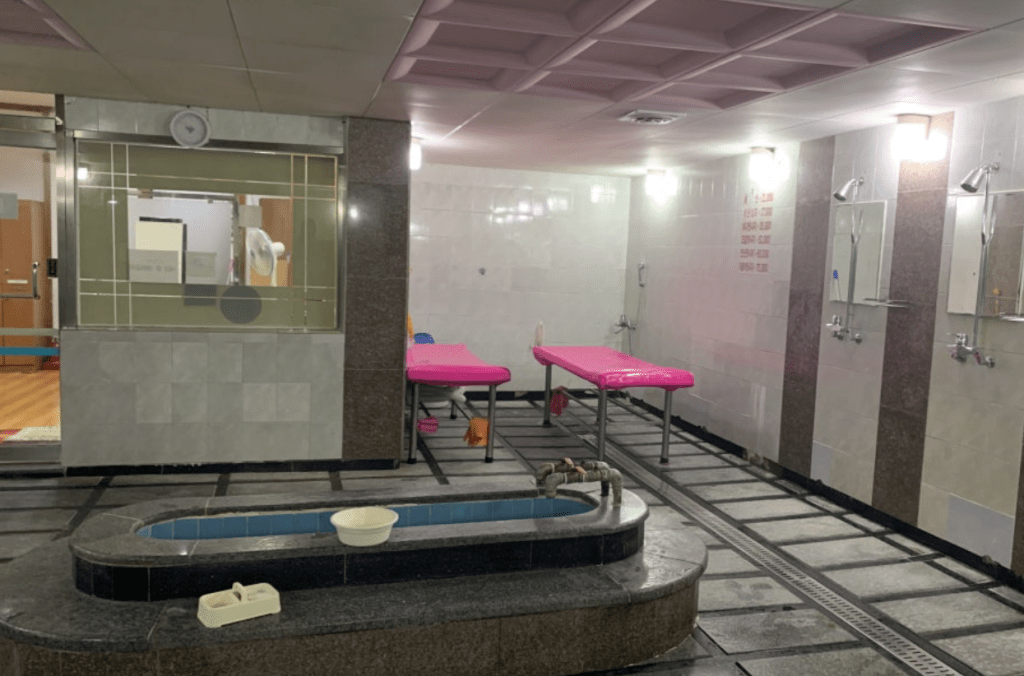
Once you fall in love with bathhouses, you naturally start exploring different locations and new ways to enjoy them more deeply. One method I always recommend — especially to beginners — is contrast bathing.

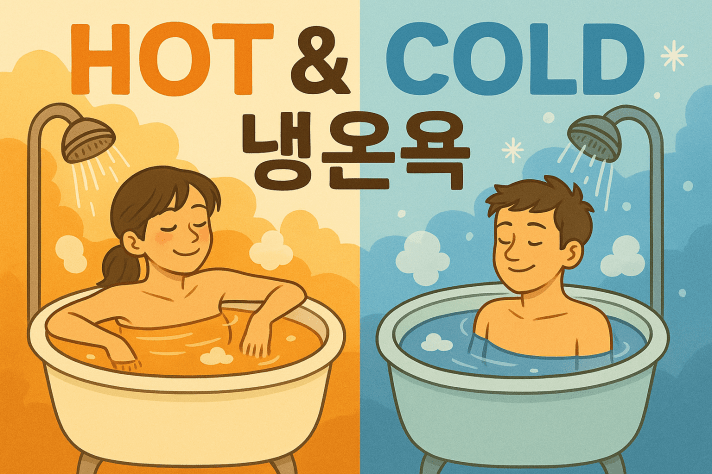
Contrast bathing is the practice of alternating between hot and cold water immersion. You soak in a warm tub to open up your blood vessels, then dip into a cold pool to constrict them. Repeating this cycle acts like a natural pump, boosting circulation throughout your body.

Improved circulation can ease fatigue, reduce shoulder stiffness, and most notably — help you feel mentally lighter. During one of the hardest chapters of my life, contrast bathing became an unexpected refuge. My body felt heavy, like a sponge soaked with worry. But after just one session, I walked out feeling lighter, not only physically but emotionally too. That cloud of gloom slowly began to lift, and I found myself becoming a bit more hopeful.

Of course, stepping into a cold bath isn’t easy. It takes courage — and that’s okay. You don’t need to plunge in all at once. At first, just dip your hands or feet. That alone can help cool your body down, and you’ll start to feel subtle changes. Eventually, you might find yourself thinking, “Maybe I’ll try a little more next time.” That curiosity is the start of transformation.

Once you get the hang of it, I recommend this cycle:

  • Warm bath (fully soak and relax)
  • Cold bath (stay just long enough to feel refreshed)
  • Rest (in a lukewarm bath or sitting on a bench)

You’ll start to notice a tingling sensation as your blood vessels expand again during the rest phase — it’s an invigorating, almost addictive feeling. I usually repeat this set two to four times depending on how I feel that day.

⚠️ Important Note

Contrast bathing can be taxing on the body. Avoid it if you have heart conditions, or if your physical condition isn’t optimal that day. Always listen to your body.

If you begin to enjoy this heat-and-cool rhythm, I suggest trying the same cycle using a sauna instead of the hot bath. Wait until sweat rolls down your chin before stepping into the cold plunge. Then take a short rest. No need to follow a strict timer — just go with your natural rhythm.

After all, this is just one of thousands of ways to enjoy a bathhouse. I hope you find your own version — something that brings you comfort, calm, and clarity in a noisy world.

🧖‍♀️ What Is a Korean Jjimjilbang?

A Beginner’s Guide to the Korean Spa Experience

If you’ve ever visited Korea or even just browsed Korean culture on YouTube, chances are you’ve heard the word “jjimjilbang” floating around. But what exactly is it?

Let me take you inside one of Korea’s most beloved and unique cultural experiences — the jjimjilbang, or Korean-style public bath and sauna.

🌡️ What Is a Jjimjilbang?

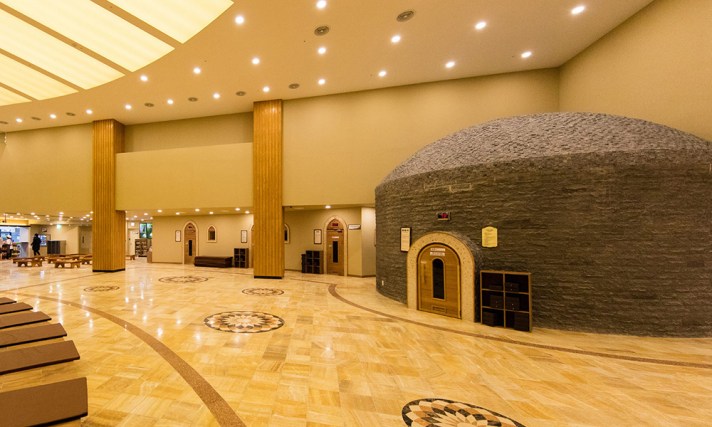
A jjimjilbang (찜질방) is a large, gender-separated bathhouse and sauna complex that offers hot and cold rooms, baths, and relaxation zones. But it’s not just about getting clean — it’s a place where people gather to detox, rest, nap, socialize, and even eat.

The core experience is all about heat therapy. Imagine stepping into a super-hot clay or stone room, almost like a giant kiln. People sit quietly on the floor, letting their bodies slowly bake in the heat — like pottery in a kiln. Soon, you’ll start sweating like rain, and your entire body feels like it’s melting into relaxation. It’s intense, but strangely addictive.

🧖‍♂️ How to Use the Hot Rooms (찜질방)

Don’t worry — you don’t have to stay long in the hottest room. Just listen to your body.

  1. Choose a room that fits your comfort — many jjimjilbangs offer rooms at different temperatures, from mild warmth to intense heat.
  2. Sit or lie down on a thin mat or towel.
  3. Stay as long as it feels right. Some people last 5 minutes, others enjoy 15–20.
  4. When it gets too hot — step out and head straight to the ice room!

❄️ The Ice Room: Cold Therapy

After sweating it all out in the hot room, you’ll want to cool down — and that’s where the ice room comes in. It’s a freezing-cold chamber that instantly refreshes your body and tightens your skin.

The contrast between hot and cold can boost circulation, soothe sore muscles, and leave you feeling deeply rejuvenated.

🧘‍♀️ Why Do Koreans Love Jjimjilbangs?

Many Koreans say that after a good jjimjil (steam session), their body feels lighter, their mind clearer, and even chronic aches like back or shoulder pain seem to ease.

It’s not just about sweat — it’s about letting go.

Plus, jjimjilbangs are affordable, social, and often open 24/7, making them a favorite hangout spot for students, families, couples, and even solo travelers.

🔥 Electric vs. Traditional Jjimjilbangs

Most big-city jjimjilbangs in Seoul use electric heaters for their hot rooms. These are clean, modern, and convenient.

But if you venture just a little outside the city, you might find traditional jjimjilbangs heated by real firewood — with rooms built from natural clay (황토, hwangto).

These traditional-style jjimjilbangs offer a deeper, more authentic experience, where the heat feels more natural, and the earthy scent of the room adds to the healing vibe.

They’re a bit farther out, but definitely worth a visit — and I can’t wait to introduce you to one of these hidden gems in a future post.

🥚 Bonus: Snacks & Culture

Don’t forget to try the iconic sikhye (sweet rice drink) and boiled eggs baked in the kiln — classic jjimjilbang treats that pair perfectly with a post-sauna rest in a reclining chair or nap zone.

✨ Final Tips for First Timers

  • Bring a change of clothes or use the provided cotton set.
  • Don’t be shy — jjimjilbangs are very communal, and everyone minds their own business.
  • Respect quiet zones.
  • Stay hydrated!
  • Try alternating hot → cold → rest in cycles — it’s therapeutic.

Korean jjimjilbangs are more than just spas — they’re a healing tradition, a part of everyday life, and a window into Korea’s deep connection with balance and well-being.

If it’s your first time, just relax — and sweat it out.

You’ll walk out feeling lighter, clearer, and maybe a little addicted.